
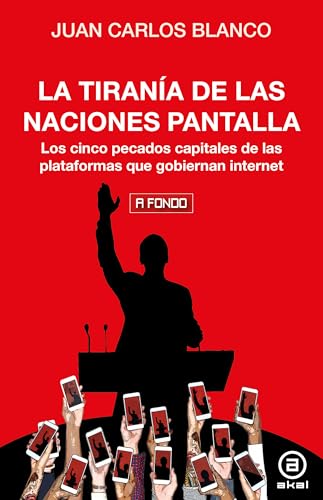
The Tyranny of the Screen Nations: The Five Deadly sins of the Platforms that Govern the Internet
In La tiranía de las naciones pantalla, Juan Carlos Blanco gives a name to a growing intuition: major digital platforms are no longer simple tools, but powerful “nations” capable of setting rules, capturing attention and reshaping public life. The book stands out for its journalistic clarity, linking programmatic advertising to the mass extraction of data and the erosion of privacy, and addictive design to a genuine epidemic of distraction. The diagnosis is severe: the weakening of journalism, the deterioration of public debate and misinformation operating on an industrial scale.
One of the book’s most valuable contributions is its connection to Convivence. Without attention, there can be no listening; without listening, no agreements; and without strong media, the public square fills with noise and empties of trust. Blanco is particularly persuasive when he brings the debate back to everyday life: as local businesses decline and more and more human interaction becomes mediated through screens, the ordinary ties that sustain community life also begin to erode.
The book can at times feel overly broad in its argument: not everything is born — nor should it be born — in Silicon Valley. Europe, moreover, should play a pioneering and more ambitious role in regulating digital platforms. Even so, Blanco’s approach remains constructive, advocating personal digital habits, media literacy, regulation and subscription models that restore citizens to the role of neighbours rather than mere “users”, while protecting the right to disagree without hatred.


