
Urban Microforests
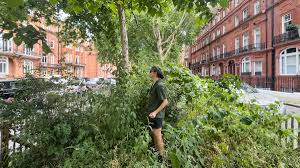
Integrating green and social infrastructure: the microforest social hub in Rome, by Fabiola Fratini, published in Academia Environmental Sciences and Sustainability (Rome, 28 January 2026).
This article examines the development of urban microforests in Rome as an innovative model of ecological urbanism, conceived as a living ecosystem in which environmental and social processes coevolve. Inspired by the Miyawaki method, these small-scale forests form part of a broader “green archipelago”, from the San Lorenzo pilot project to the 15 Microforests for the 15-Minute City initiative.
The study approaches microforests through four interconnected dimensions: ecology, pedagogy, civic engagement, and conviviality. Ecologically, these projects contribute to biodiversity, soil regeneration, and urban resilience. Pedagogically, they function as outdoor classrooms that foster environmental literacy and experiential learning. From a civic perspective, they encourage participation, citizen science, and shared responsibility between communities and their environment.
The article also underlines both the transformative potential and the fragility of these initiatives, whose long-term success depends on sustained educational activation, cultural programming, and institutional cooperation. Within this framework, the MiCS initiative (Microforests Cultural Hub Sapienza: A Bridge Between Ecology and Community) redefines the microforest as a civic infrastructure and living laboratory where universities, schools, and local communities collectively produce ecological and cultural value.
When the author refers to “conviviality” in the sense developed by Ivan Illich, we may also speak today of Convivence: a deeper condition of reciprocity, shared agency, and co-responsibility between human beings and their environment. In this sense, Roman microforests are not simply green infrastructures, but infrastructures of Convivence, capable of cultivating ecological awareness, collective stewardship, and new forms of regenerative urban life within the broader process of ecological transition.
Integrating green and social infrastructure: the microforest social hub in Rome


